On a big job, the building is the easy part. The hard part is everything around it: pricing six trades into one quote, getting each subcontractor on site on the right day, keeping track of extras, staying on the right side of CIS, and making sure the customer pays as each stage is finished. OnBelt puts that in one place.
The jobs you quote
- Extensions, from a single-storey kitchen extension to two storeys.
- Loft and garage conversions.
- Full renovations of older Scottish homes.
- Structural alterations: knocking through, new openings, steels.
- Tenement and stonework repairs, often for several owners at once.
How OnBelt fits the way you work
- Find the big one.A surveyor can search the leads and draft the scope on site. Sending the quote is the owner's call, so they ask for access and you approve it in a tap.
- Build the team.Name your own crew, invite a trade you use, or publish a package to subcontractors, waste removal included. See the licences and insurance each firm has added before you choose.
- One quote for the whole job.Every trade's part rolls up into one quote, with each trade named, priced in stages, VAT shown.
- Extras reviewed first.Extra work raised by your team is reviewed by the office before the customer sees it, then the customer approves or declines it.
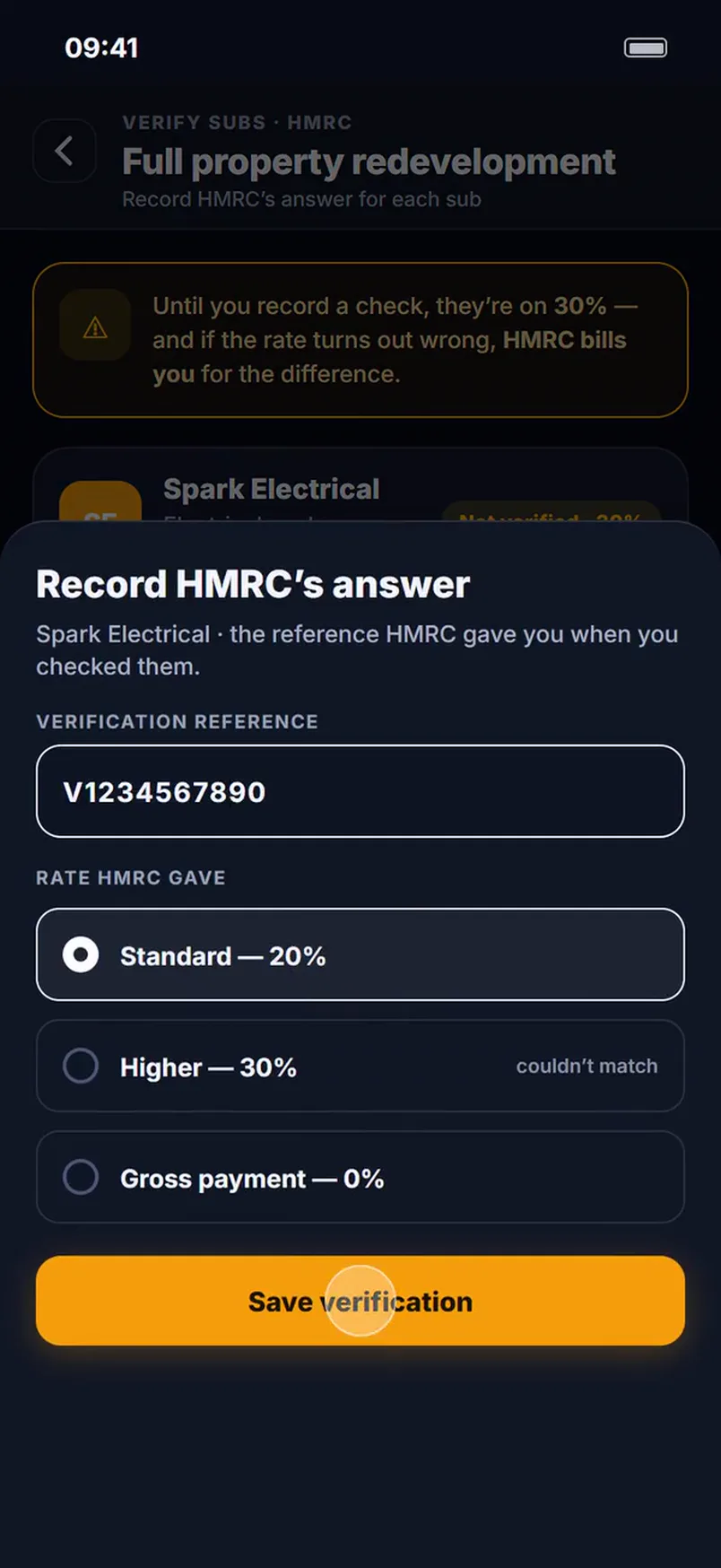
- CIS checks on record.Record each subcontractor's HMRC check alongside the job.
- Sign-off from photos.Stages are signed off from photos, so there's a clear record of what was done and when.
- The crew's calendar.See where you're short of people or double-booked, a day, a job, a week or a month at a time.
- Reviews both ways.When the job's signed off, the customer reviews you, and you review each subcontractor.
Lining stages up with the building warrant
Most extensions and conversions need a building warrant, and the council will want to inspect at certain points. Setting your payment stages to match those points (foundations, wallhead, roof on, first fix, completion) means the customer is paying for work the council has seen. Our guide to building warrants in Scotland explains the process from the homeowner's side.
OnBelt puts leads, whole-job quotes, your crew’s calendar and invoices in one app. It’s coming soon.
Get early accessSubcontractors, CIS and VAT
As a main contractor paying subcontractors, you'll be registered for CIS, verifying each sub and filing a return by the 19th of every month. If you and your subs are VAT-registered, the VAT reverse charge applies to their invoices to you, while you charge the homeowner VAT as normal. Our guides to CIS and the reverse charge set out the rules.
Frequently asked questions
Is OnBelt available for builders yet?
Not yet. OnBelt is launching first in Scotland's Central Belt. Join the early-access list as a trade and we'll tell you when it opens.
Can my subcontractors use OnBelt too?
Yes. They can be invited into a job or answer a package you publish. They price their own part, and the customer sees one quote for the whole job.
Can I control what my team can do?
Yes. Everyone gets their own login and a role that fits their job, with permissions you can adjust person by person. An estimator can quote without being able to accept the work.
How are extras handled?
Extras raised by your team can be held for the office to review before the customer sees them. The customer then approves or declines each one, and nothing extra starts until it's agreed.